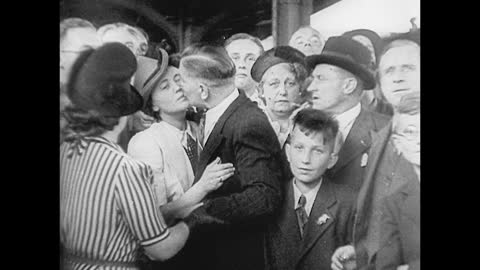
Mobilisation in the Netherlands and Belgium, 1939–1940
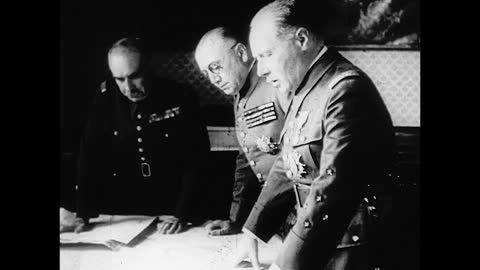
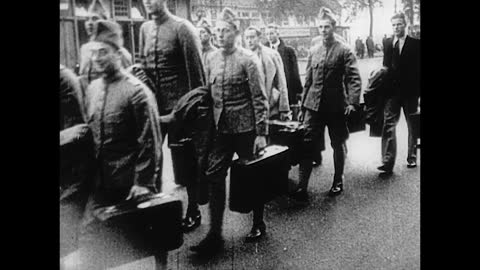
Reservists carry their suitcases to the station, soldiers board trains amid farewells, officers bend over a map, and churches protect their windows.
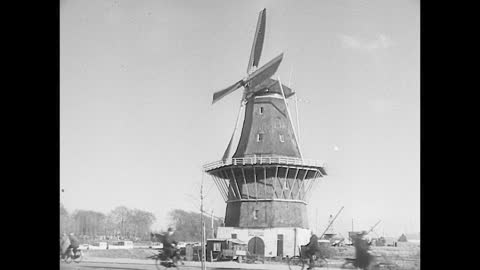
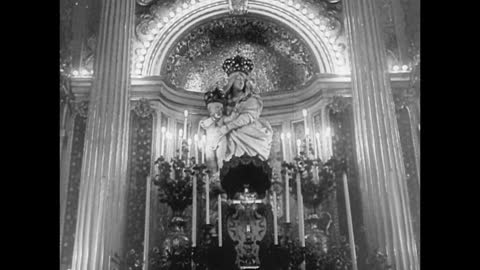
A tall windmill turns beside a quay, and dignitaries gather around a throne in a Gothic church. Three officers bend over a map in a panelled room. Young soldiers in high-collared tunics carry suitcases along a street, reservists in suits crowd a platform, soldiers in crested helmets climb into railway carriages, a woman kisses a man goodbye and hats wave at the departing train. A woman lights a candle, and timber casings shield the pillars and windows of a church.
The Netherlands and Belgium had declared their neutrality and mobilised in late August 1939. Both refused to coordinate their defence openly with Britain and France, for fear of giving Germany a pretext. When the German attack came on 10 May 1940, the Allied armies advanced into Belgium as planned, while the Dutch army was left largely on its own.