The Wartburg above Eisenach, 1937
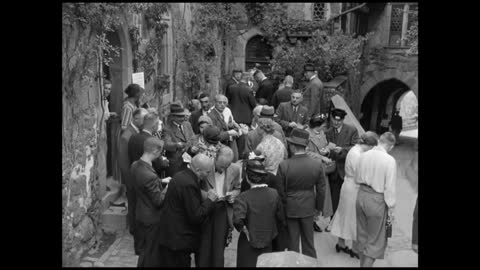
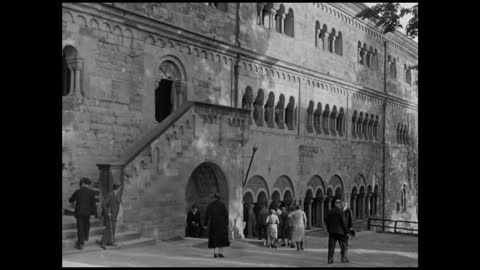
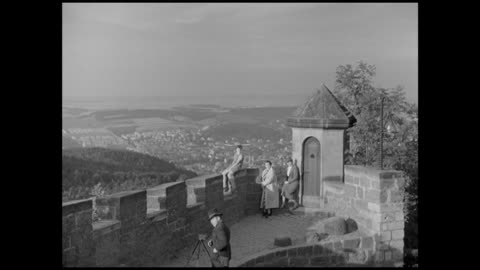
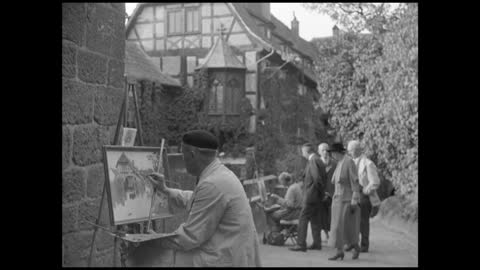
Visitors crowd the ivy-hung courtyard, an elderly painter works at his easel, and people look out from the battlements over the wooded hills.
A crowd of visitors streams through the arched gate into the half-timbered outer courtyard and gathers round a guide. An elderly painter in a black beret and white smock stands at his easel before a half-timbered house with an oriel, painting it in watercolour while tourists stroll past. In the inner courtyard people walk below the round-arched arcades and outside staircase of the Romanesque palace, and on the battlements beside a little turret they sit and gaze down on the town in the valley.
The landgraves of Thuringia built the palace around 1160; here Martin Luther, hidden by his elector in 1521, translated the New Testament into German. The regime claimed Luther as a German hero, and the castle was one of the most visited sights in the Reich.