The Maginot Line and the French defences, 1930–1940
Concrete is poured for blockhouses, soldiers ride a tunnel railway, armoured turrets rise from the ground, and French tanks stand ready in a depot.
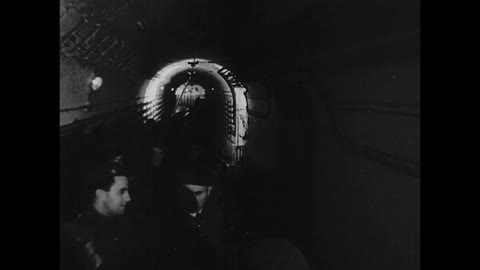
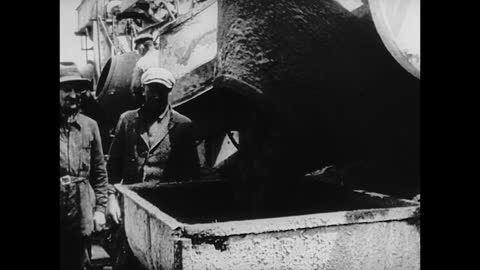
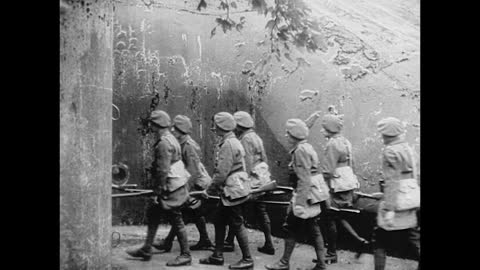
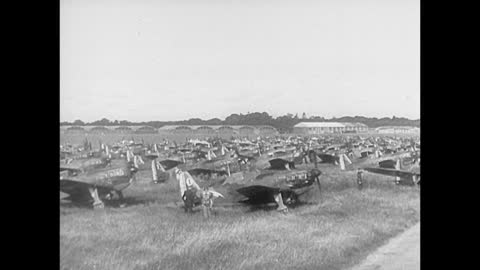
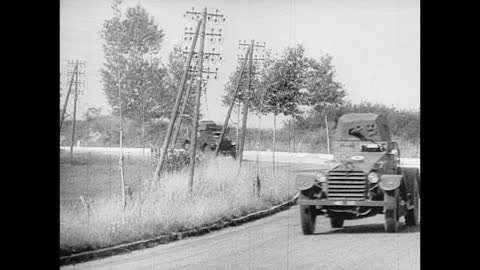
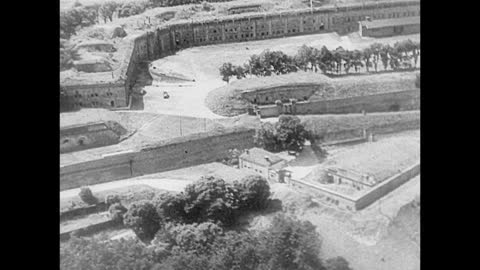
Concrete pours from a mixer, a finished blockhouse stands among trees, soldiers in berets ride a small train through a vaulted gallery, and low armoured turrets with gun barrels rise from bare ground. Soldiers march past the gate of the Caserne Maginot, visitors walk through a tunnel, and a marshal resembling Philippe Pétain stands among men in dark suits. Rows of aircraft wait on an airfield, small tanks with French roundels fill a depot yard, and an older fortress spreads out below an aircraft.
From 1930 France built a line of underground forts along its border with Germany, named after the war minister André Maginot. It was meant to spare French lives after the losses of 1914–1918, but it ended at the Belgian frontier, where the French command expected to meet a German attack in Belgium itself. In May 1940 the Germans drove through the Ardennes north of the line, which was left largely intact.
Film A tunnel railway and gun turrets of the Maginot Line
 Film
Concrete poured for fortifications
 Film
The Caserne Maginot, visitors underground and Pétain
 Film
Rows of parked aircraft and a high-winged monoplane
 Film
Tanks with French roundels and an armoured car
 Film