Tempelhof Airport, 1937
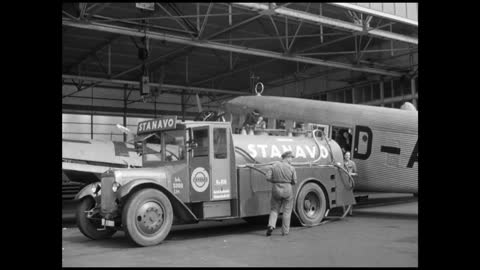
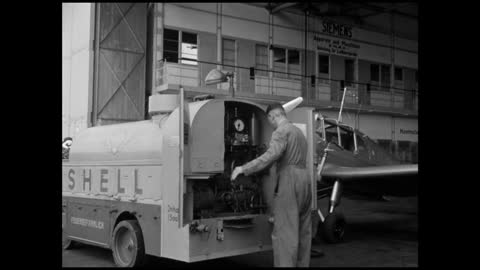
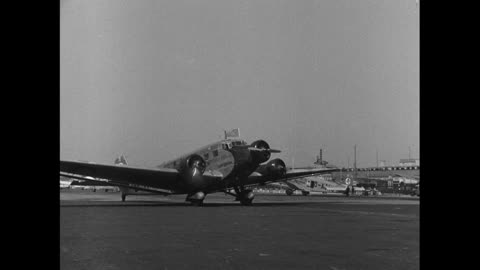
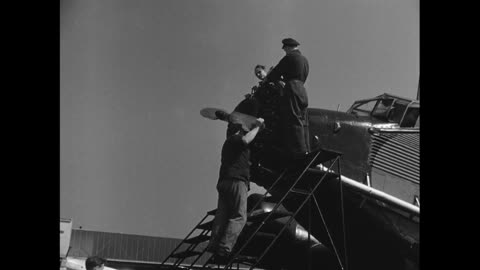
A Ju 52 taxis across the apron, mechanics work on the aircraft 'Wilhelm Cuno' and 'Gustav Leffers', passengers gather round the 'Obersalzberg', and BP, Stanavo and Shell tankers fuel the planes.
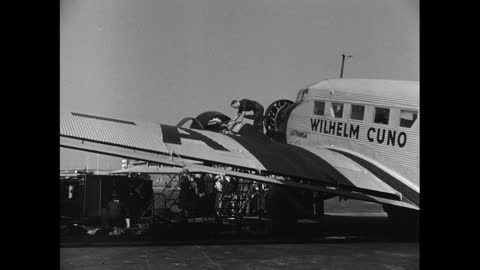
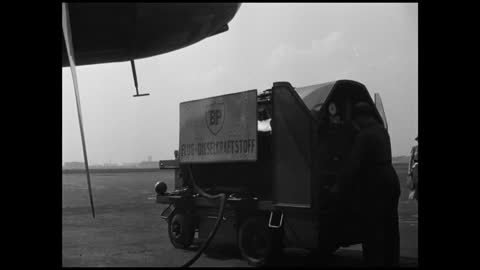
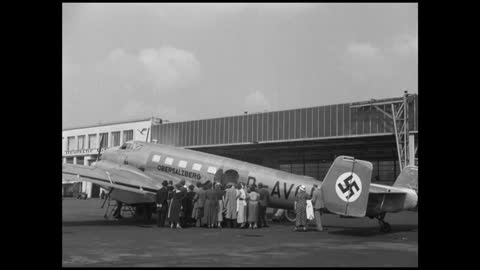
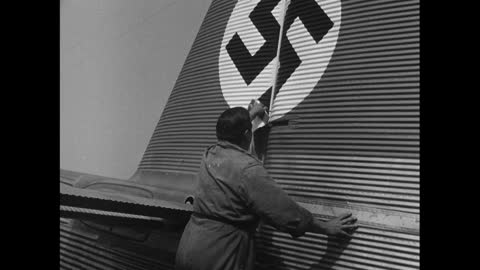
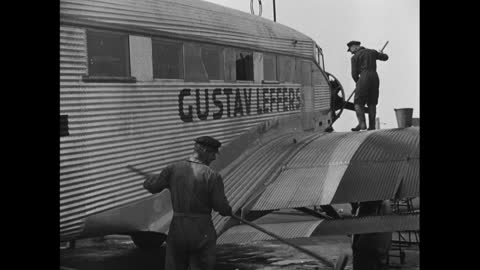
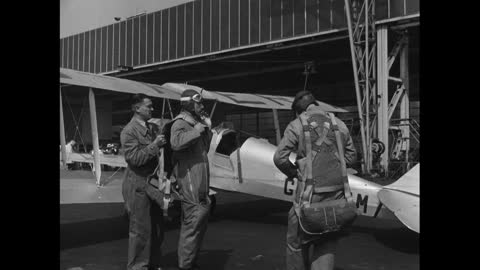
A three-engined Junkers Ju 52, registration D-ATYZ, a swastika on its tail, taxis across the apron and stands before Hangar IV. Mechanics on wheeled ladders work on the nose engine of the Wilhelm Cuno, and two men scrub the wing of the Gustav Leffers with long brushes. Before the long hangars, passengers and relatives gather at the door of a twin-engined aircraft named Obersalzberg while a Luftwaffe officer stands by. A trailer marked BP Flug-Dieselkraftstoff stands under a wing, in a hangar mechanics climb over a large STANAVO tanker, and a streamlined SHELL truck fuels a light aircraft in front of a building marked SIEMENS. Beside a white biplane, men in flying suits help one another into parachute harnesses.
The Ju 52 was Lufthansa's workhorse and Tempelhof its hub. The airline named its aircraft after notable Germans: Wilhelm Cuno had been chancellor in the crisis year of 1923, Gustav Leffers a fighter pilot of the World War, killed in December 1916. Three foreign oil companies fuelled German aviation side by side; Germany imported most of its oil, and Göring's Four-Year Plan was meant to replace it with synthetic fuel from coal before war came.
Film The Ju 52 'Wilhelm Cuno' at Tempelhof, 1937
 Film
BP aviation diesel truck at Tempelhof, 1937
 Film
Lufthansa airliner Obersalzberg at Tempelhof, 1937
 Film
Passengers boarding and an airliner overhead, Tempelhof 1937
 Film
Stanavo tanker refuelling an airliner in a hangar, 1937
 Film
Shell tank truck servicing a small aircraft, 1937
 Film
A Lufthansa Ju 52 taxis at Tempelhof, 1937
 Film
Mechanics at the engine of a Ju 52, 1937
 Film
The swastika on the tail fin, 1937
 Film
Cleaning the Ju 52 'Gustav Leffers', 1937
 Film