The Leitz works at Wetzlar, 1937
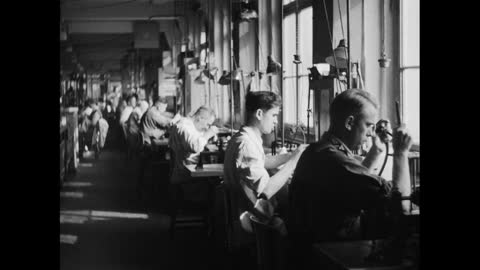
Precision workers in white coats assemble and test Leica cameras, a woman glues camera coverings, lens blocks turn on the polishing machines, and lunch is eaten at the bench.
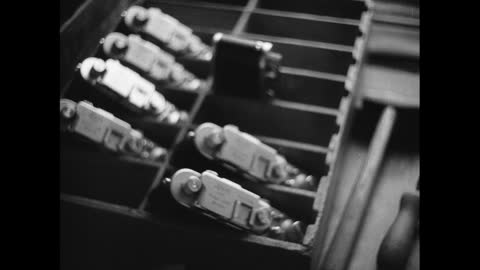
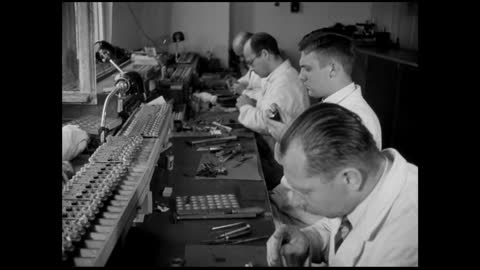
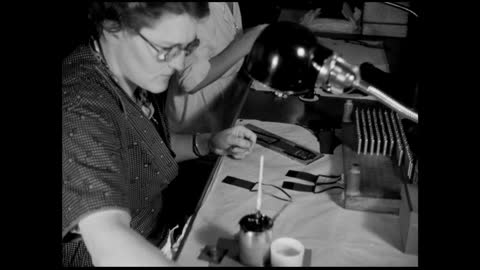
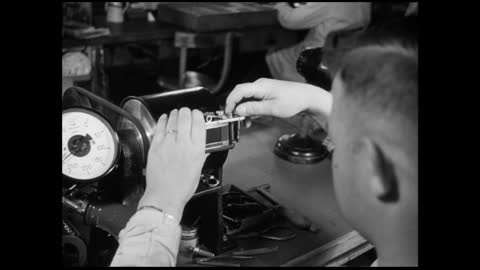
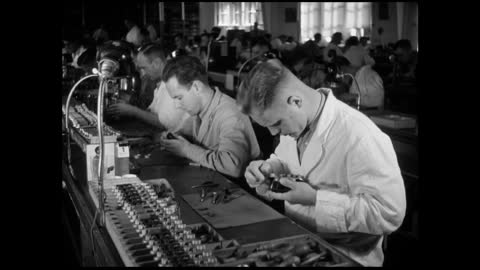
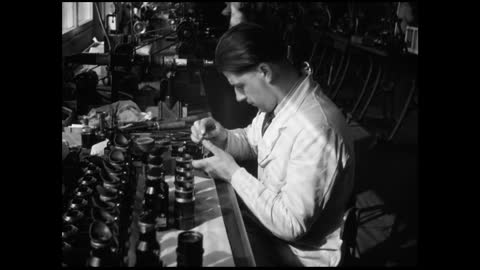
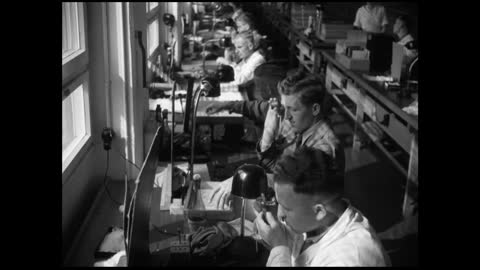
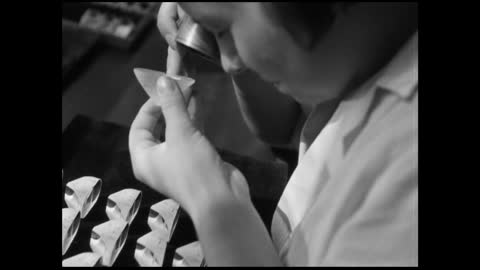
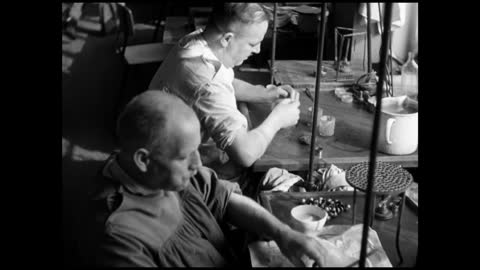
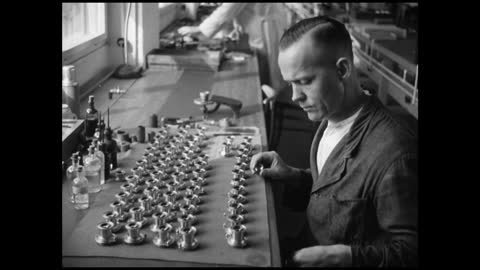
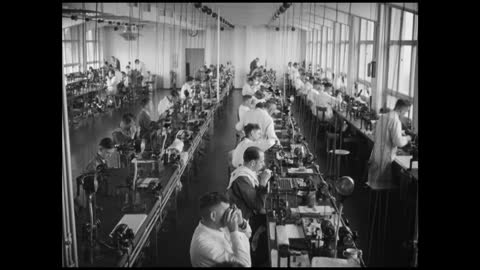
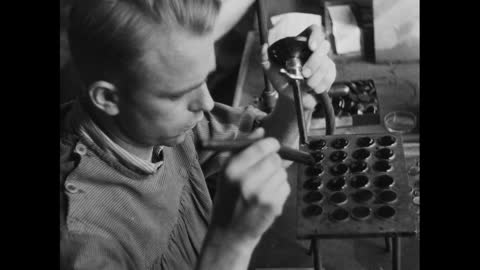
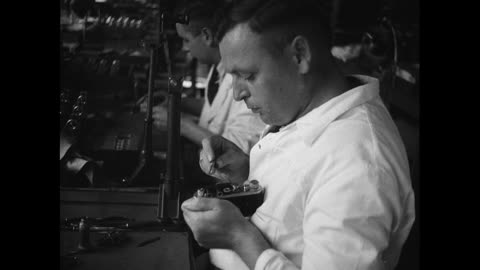
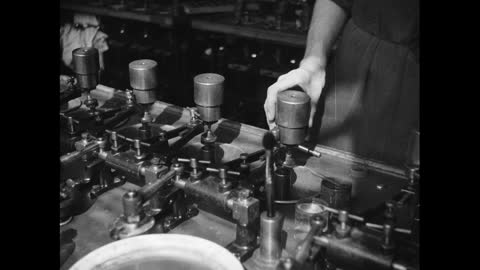
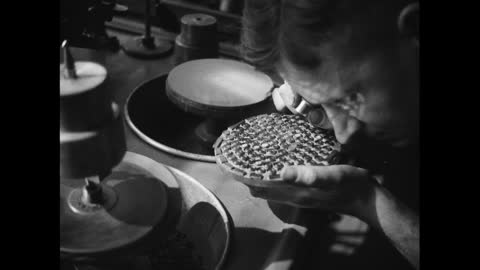
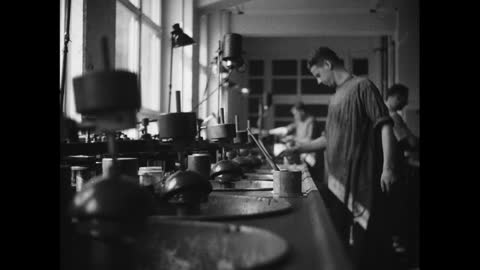
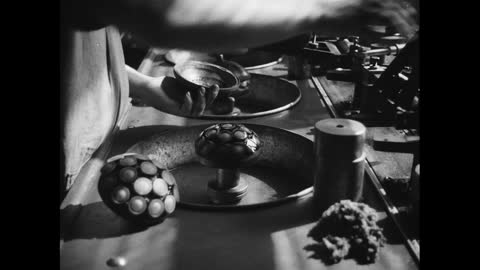
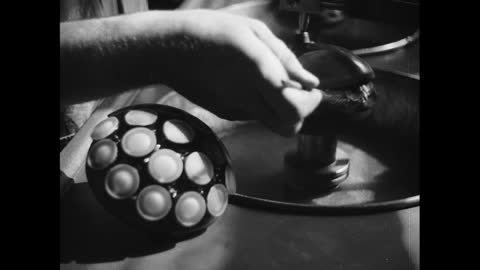
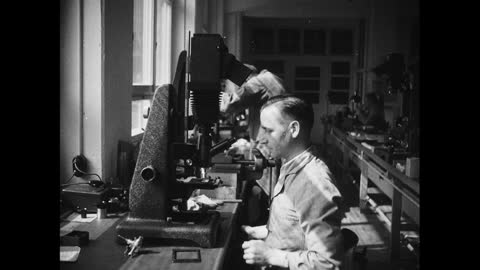
Long halls lit by tall windows are lined with benches where men and women in white coats bend over small parts. Among racks of camera bodies, workers sight through Leica rangefinders with a loupe, adjust them with fine screwdrivers, set a camera before a large dial gauge to test the shutter, and thread the end of a 35mm film into an open camera base. A woman in glasses spreads glue on strips of black covering. In the lens shop young men tend rows of grinding and polishing machines; one lifts a domed block set with dozens of lenses and checks it with a loupe clamped in his eye, while others hold lenses and glass prisms to the light. At midday the men eat their bread at the bench beside enamel mugs and small tools, and an older man reads a sheet of paper as he eats.
The firm of Ernst Leitz made microscopes long before Oskar Barnack's Leica of 1925 put 35mm film into reporters' hands. Max Berek calculated the lenses, and the coupled rangefinder of 1932 made the Leica the camera of press photographers around the world. Ernst Leitz II, who ran the firm, quietly helped Jewish employees and their relatives to leave Germany in the 1930s, placing them with Leica dealers abroad. Two years after these pictures, Leicas went to war with the photographers of the propaganda companies.
Film Leica bodies in a rack, 1937
 Film
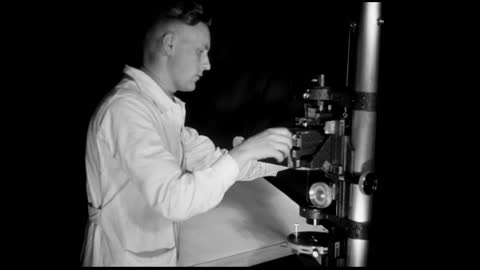
Adjusting a precision instrument at the Leitz works, 1937
 Film
Men at the assembly bench, Leitz works, 1937
 Film
A woman gluing camera covering, Leitz works, 1937
 Film
Testing a Leica shutter against a dial, 1937
 Film
Rows of instrument makers at their benches, 1937
 Film
Cleaning lenses and checking lens barrels, 1937
 Film
Inspecting lenses with a loupe, Leitz works, 1937
 Film
A woman examining prisms with a loupe, 1937
 Film
Lunch break at the workbench, Wetzlar 1937
 Film
Precision worker with rows of metal parts, Wetzlar 1937
 Film
Assembly hall of the Leitz works, Wetzlar 1937
 Film
The Leica works at Wetzlar, 1937
 Film
Fitting lens parts at the Leica works, 1937
 Film
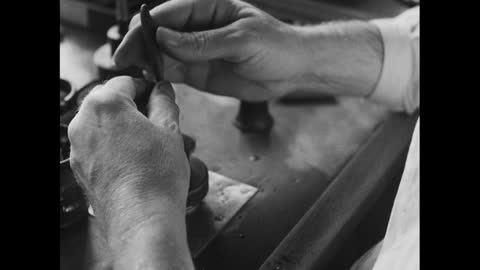
Hands at work on a precision part, 1937
 Film
Checking a Leica at the Wetzlar works, 1937
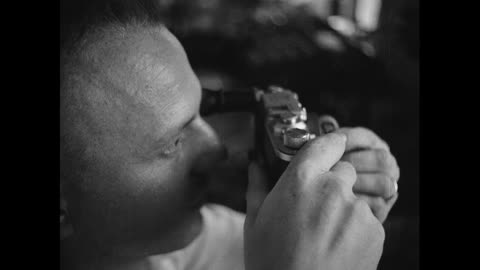 Film
Adjusting the rangefinder, 1937
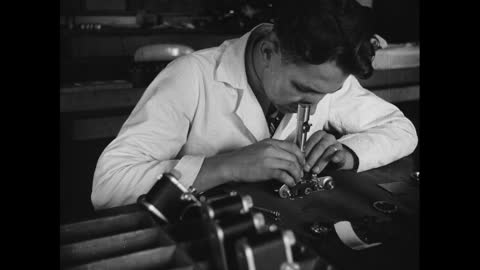 Film
Assembly under the magnifier, 1937
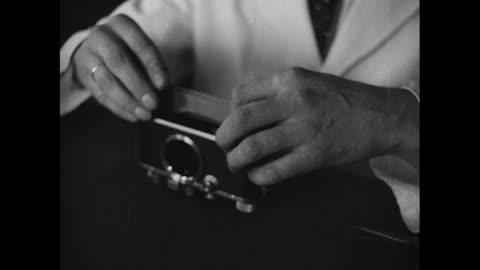 Film
Loading film into a Leica, 1937
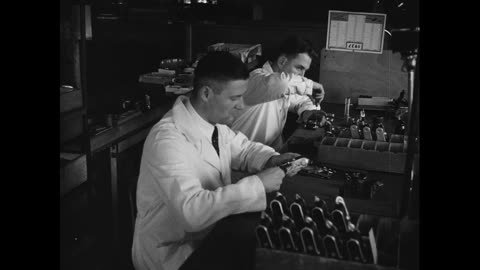 Film
Two workers at the assembly bench, 1937
 Film
Polishing lenses at Wetzlar, 1937
 Film
Inspecting a block of lenses, 1937
 Film
The lens-grinding shop, 1937
 Film
Lens blocks on the polishing bench, 1937
 Film
A polished lens block, close view, 1937
 Film